
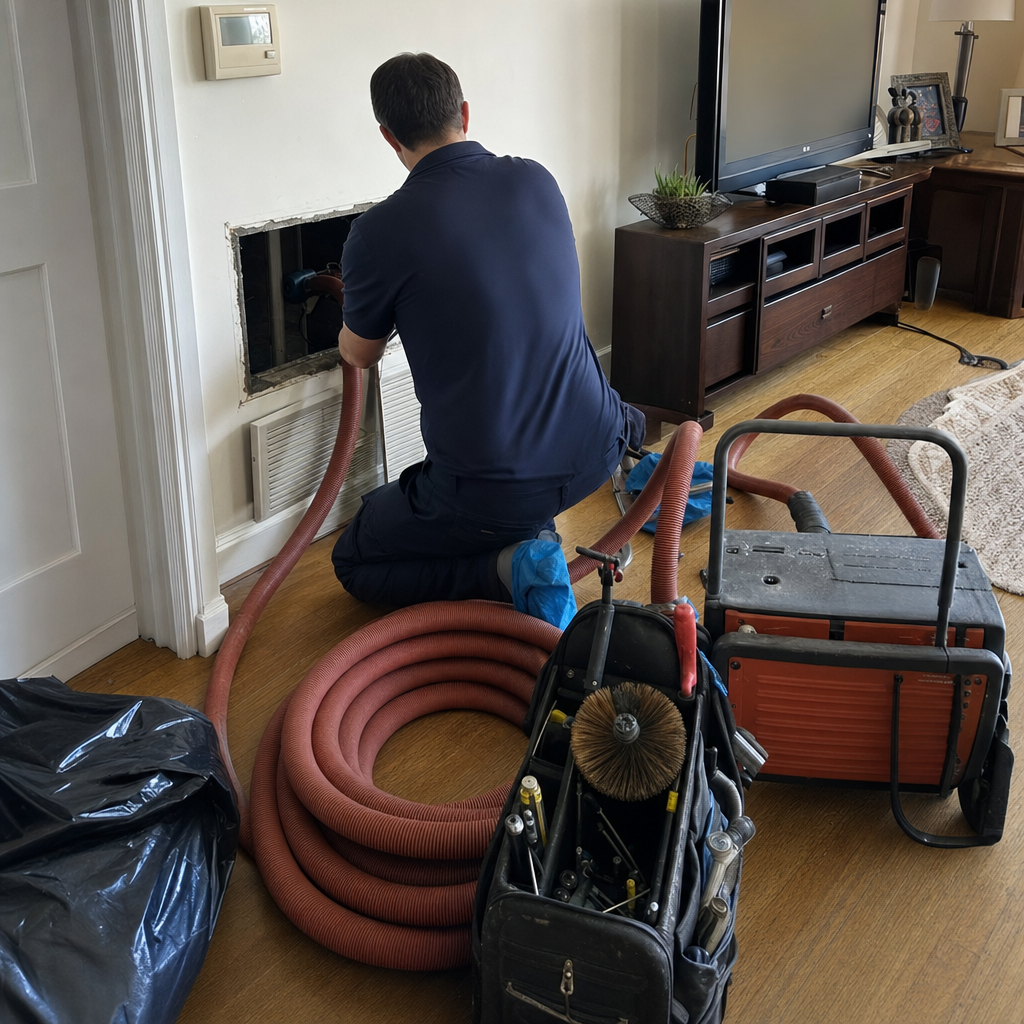
Duct Sealing Cost in Connecticut: $1,200–$3,800 for Most Homes, With Attic and Crawl-Space Work at the Higher End
Professional duct sealing in Connecticut typically runs $1,200 to $3,800 for residential systems, with manual mastic sealing starting around $1,200–$2,200 and aerosol injection (Aeroseal) ranging $2,000–$3,800 depending on duct accessibility and leakage severity. Most Connecticut homes we assess lose 20–30% of their conditioned air through leaks — in a state averaging 5,800–6,200 heating degree days annually, that waste shows up on every winter utility bill. Call (866) 531-5603 for a free estimate and same-week scheduling.
Growing up in New Haven’s Fair Haven neighborhood, Matthew Gonzalez spent winters in triple-deckers where radiator clanking and ice on the inside of windowpanes were just February realities. Those old buildings taught him early that drafty rooms aren’t always about windows — sometimes the heat never made it there in the first place. Two decades later, that same understanding drives how we price and perform duct sealing across Connecticut: we look at where your ducts live, what they’re made of, and how much air you’re actually paying to heat before we quote a dollar figure.
Why Connecticut Homes Lose More Conditioned Air Than the National Average
The U.S. Department of Energy’s 20–30% leakage figure assumes typical duct placement. Connecticut’s housing stock skews older and less forgiving. Cape Cods built in the 1950s–70s often route flex duct through unvented attics that hit 140°F in July and drop below 20°F in January. Split-levels common in Fairfield and Hartford counties bury supply runs in crawl spaces where seasonal groundwater keeps metal ducts damp and corroding. Center-hall colonials from the 1920s–40s — still abundant in West Hartford, New Britain, and Wallingford — frequently have original galvanized ductwork with seams that have worked loose over ninety-plus heating seasons.
We’ve measured supply temperatures at registers in a Manchester split-level’s finished basement that ran 18°F below the furnace output. The duct wasn’t damaged — it was simply lying in a gravel crawl space with disconnected joints every ten feet. The homeowner had spent three winters cranking the thermostat and blaming the furnace.
Here’s what drives How Much Does Duct Repair & Sealing Cost? (2026 Price Guide) — Connecticut, CT above or below that $1,200–$3,800 midpoint:
- Duct location: Attic and crawl-space runs require more labor hours and often demand temporary access panels — these add $300–$800 over basement-only systems
- Leakage severity: A system losing 15% of airflow needs spot sealing; one losing 40% needs comprehensive joint and register boot work
- Duct material: Sheet metal with original snap-lock seams seals more predictably than deteriorating fiberboard or kinked flex duct that needs replacement first
- Pre-existing contamination: Sealing over layers of dust, mold, or construction debris compromises adhesion — cleaning must happen first, which changes the project scope
- Sealing method chosen: Manual mastic application versus aerosol injection (Aeroseal) carries different equipment and labor cost structures
Connecticut’s climate amplifies every one of these factors. A leaky duct in Atlanta costs you comfort; a leaky duct in New Britain costs you comfort plus six months of inflated natural gas or propane bills at New England rates.
Mastic Sealing vs. Aeroseal: What Each Costs and Where Each Fits
Most homeowners don’t realize “duct sealing” describes two fundamentally different processes. We’ve performed both across Connecticut, and the right choice depends on your home’s construction, your duct layout, and what we’re trying to solve.
Manual Mastic Sealing: $1,200–$2,200
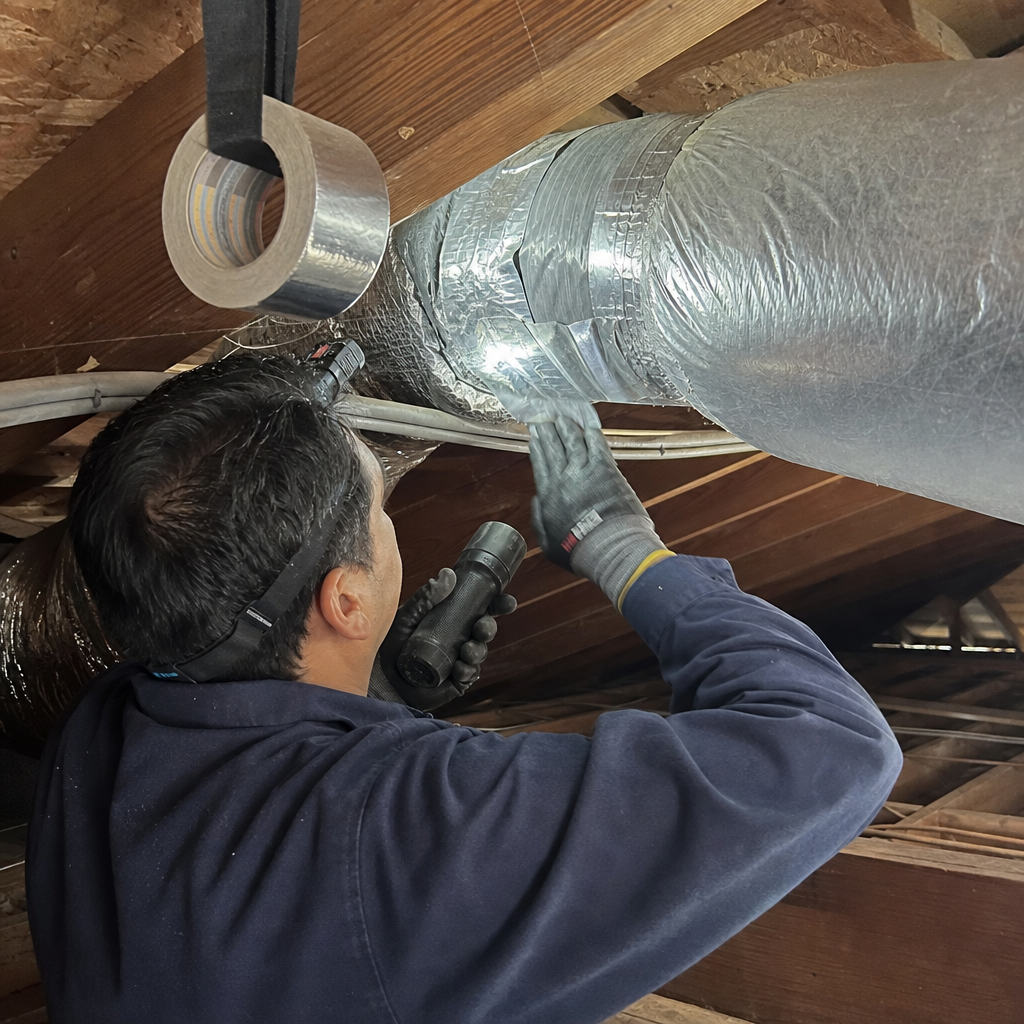
We apply water-based mastic sealant — a thick, fiber-reinforced compound — directly to every accessible joint, seam, and register boot connection. This is hands-on work: Matthew crawls the attic or crawl space with a brush and light, coating each leak point and allowing proper cure time before system restart.
Mastic sealing fits best when:
- Your ductwork is fully accessible in an unfinished basement or open attic
- Leaks are concentrated at visible joints rather than distributed throughout the system
- You’re already having ducts cleaned, and we can sequence sealing immediately after
- Budget is a primary constraint, and the leakage pattern is localized
We use mastic rated for the temperature swings Connecticut ducts experience — not the hardware-store caulk some crews substitute. A proper mastic job on a 2,000-square-foot colonial with basement duct runs typically takes 4–6 hours and holds for 15–20 years when applied to clean surfaces.
Aerosol Injection (Aeroseal): $2,000–$3,800
Aeroseal pressurizes your duct system and injects a vinyl polymer fog that seals leaks from the inside. The technology measures leakage before and after in real CFM — no guesswork. We’ve seen systems drop from 35% leakage to under 5% in a single four-hour treatment.
Aeroseal fits best when:
- Ducts run through finished walls, ceilings, or inaccessible crawl spaces where manual sealing isn’t practical
- Leakage is distributed throughout the system rather than isolated to visible joints
- You want documented before/after performance data for energy audit or resale purposes
- The home has been air-sealed and insulated, leaving duct leakage as the remaining major efficiency loss
The equipment investment is significant — we partner with certified Aeroseal technicians when this method is indicated — and that overhead explains the higher price point. For a 3,000-square-foot home in Greenwich or Stamford with ducts embedded in finished ceilings, Aeroseal often costs less than opening walls for manual access.
| Method | Typical Cost Range | Best For | Verification Method |
|---|---|---|---|
| Manual mastic sealing | $1,200 – $2,200 | Accessible ducts, localized leaks | Visual inspection, pressure test |
| Aeroseal injection | $2,000 – $3,800 | Inaccessible ducts, distributed leakage | Automated pre/post CFM measurement |
| Combined: clean + seal + test | $1,800 – $3,200 | Older systems needing full service | Air quality test, pressure differential |
Our Duct Repair & Sealing service page details the full process, but the cost question always comes back to what your specific system needs — not what a flat-rate coupon promises.
The Cleaning-Before-Sealing Rule Most Contractors Ignore
Here’s a sequencing detail that costs homeowners money twice: sealing over dirty duct surfaces. Mastic adheres to metal, not to the greasy film of cooking oil, pet dander, and settled construction dust that coats most ducts after five-plus years of use. We’ve opened systems that another company “sealed” two seasons prior and found the mastic peeling away in strips, leaking worse than before because the underlying grime created a failure plane.
Our standard on every job: clean first, seal second, verify last. We run Rotobrush and Nikro equipment through the full system to remove contamination down to the substrate. Only then do we apply sealant. This adds $400–$700 to a combined service versus sealing alone, but it ensures the repair lasts and doesn’t become a callback.
If you haven’t thought about what’s inside your ducts, your ducts have been thinking about it for you.
This sequencing discipline also means we can perform air quality testing in the same visit — using Abatement Technologies and Honeywell monitoring equipment to establish a pre-service baseline and post-service verification. One technician, one appointment, one coordinated scope. Property managers in New Haven and Hartford particularly value this; they’re not coordinating three different contractor visits across tenant schedules.
What Duct Sealing Actually Saves You in Connecticut’s Climate
Generic “you’ll save on energy bills” claims are useless without numbers tied to local conditions. Connecticut averages roughly 5,800 heating degree days in the coastal zone (Bridgeport, New London) and 6,200 in the northwest hills (Torrington, Litchfield). Each degree day represents one degree below 65°F for one day — the standard measure of heating demand.
A home with 30% duct leakage and a $2,400 annual heating bill is effectively spending $720 to heat its attic, crawl space, or wall cavities. Sealing that leakage to 5% — a realistic Aeroseal result, or achievable with thorough mastic work on accessible systems — drops the waste to $120. At the midpoint of our sealing costs ($1,800–$2,500 for most projects), the simple payback runs 3–4 years on heating savings alone.
That calculation ignores several Connecticut-specific upsides:
- Cooling season extension: Central AC use has risen sharply in Connecticut over the past decade; leaky return ducts pull 85°F attic air into the system, reducing effective capacity by 15–25%
- Equipment longevity: Furnaces and heat pumps running shorter cycles to achieve setpoint experience less ignition wear and compressor cycling
- Comfort premium: Rooms that previously needed space heaters or window units become usable — we hear this consistently from homeowners with second-floor bedrooms in Cape Cods
- Humidity control: In summer, sealed supply ducts deliver full dehumidification capacity to each room; leaky basement returns pull damp crawl-space air that raises indoor relative humidity
Matthew’s seen the math work out faster in homes with propane or oil heat — common in rural Connecticut where natural gas isn’t available — because those fuels run 30–50% more per BTU than gas. A Lebanon or Columbia homeowner with a 2,500-square-foot house and oil heat might see $900–$1,100 in annual waste from duct leakage alone.
What to Look for in a Connecticut Duct Sealing Quote
Not every company offering “duct sealing” performs the same work. We’ve been called to fix competitors’ shortcuts — mastic slapped on from the basement without attic inspection, register boots left unsealed because they required removing trim, or systems sealed without ever measuring airflow.
When you’re comparing quotes, these specifics separate legitimate operators from coupon-driven crews:
- Pre-sealing leakage measurement: Any reputable technician should quantify your leakage in CFM at 25 Pascals pressure — the industry standard. A numberless quote is a guess.
- Access plan: Ask specifically how they’ll reach attic and crawl-space ductwork. If the answer is vague, they’re planning to skip it.
- Surface preparation: Will they clean before sealing? The honest answer for most older Connecticut systems is yes — and that should be in writing.
- Post-sealing verification: Pressure testing after completion confirms results. We provide before/after documentation on every job.
- Single-technician accountability: With owner-operated service, the person quoting is the person performing — no subcontractor handoffs where scope gets lost.
Matthew handles your job personally — owner on-site, every time. Two decades of duct systems means we’ve seen — and fixed — just about everything. We use Rotobrush and Nikro equipment because your air quality isn’t a DIY project. From cleaning to sealing to sanitizing — one call covers your entire duct system. 663 customers don’t leave 4.9 stars for average work.
FAQs
Most Connecticut homeowners pay between $1,200 and $3,800 for Affordable Duct Repair & Sealing in Connecticut, CT, with manual mastic work at the lower end and aerosol Aeroseal treatment at the higher end. Homes with ducts in unconditioned attics or crawl spaces — common in older Connecticut construction — typically fall in the upper half of that range due to additional labor. Call (866) 531-5603 for an exact quote — estimates are free.
Sealing existing ductwork is almost always cheaper than full replacement, typically costing 30–50% less than installing new ducts in the same pathways. Replacement becomes the better option when ducts are corroded galvanized metal, contaminated with mold that can’t be fully remediated, or improperly sized for the current HVAC system. We assess this during our initial inspection and won’t recommend sealing if replacement is the smarter long-term investment.
Yes — we perform duct sealing year-round in Connecticut, and winter is actually ideal for identifying leaks because the temperature differential between supply air and ambient conditions makes thermal imaging more revealing. Mastic curing requires temperatures above 50°F during application, which we achieve by temporarily heating work zones in unfinished spaces. Aeroseal is temperature-independent since the duct system itself is pressurized and isolated.
Most residential duct sealing projects take 4–8 hours depending on system size and method. You don’t need to leave — we work in unfinished basements, attics, and crawl spaces while keeping living areas accessible. We do ask that pets be secured and that you avoid running the HVAC system for 2–4 hours after mastic application to allow proper curing. For Aeroseal treatment, the system is temporarily offline during the 4-hour process but available immediately after.
Ready to Stop Heating Your Attic?
Every winter you wait is another season of paying for air that never reaches your rooms. Matthew Gonzalez and our team at Elite Air Duct Cleaning Service Connecticut will assess your system, measure your actual leakage, and give you a straight price with no pressure — just the same honest approach that’s earned us recognition for the Best Duct Repair & Sealing in Connecticut, CT and 663 verified reviews. Call (866) 531-5603 today for your free estimate and same-week appointment.
Written by Matthew Gonzalez, Owner & Lead Technician at Elite Air Duct Cleaning Service Connecticut, serving Connecticut, CT.