
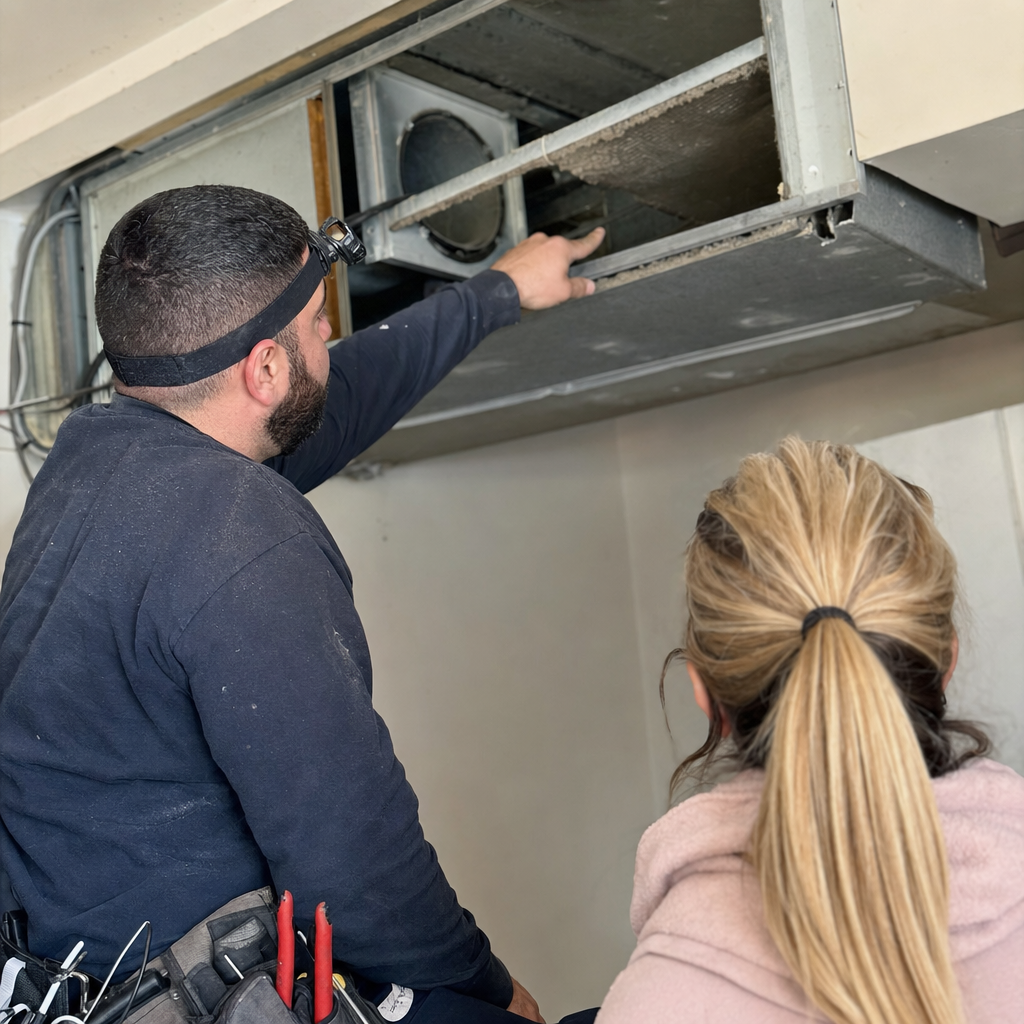
Is Air Duct Cleaning Worth It in Connecticut? Usually — If Your Home Matches the Conditions We See Every Day
Air duct cleaning is worth the cost in Connecticut when your system shows signs of contamination, not as a routine preventive measure for a healthy system. For most homeowners we meet across the state, the question isn’t whether cleaning has value — it’s whether their ducts have reached the point where professional removal of debris will measurably improve airflow, air quality, or system efficiency. If you’re noticing persistent dust, musty odors when the heat kicks on, or you’ve never had your ducts inspected in a home built before 1990, the odds favor it being worthwhile. Call (866) 531-5603 for a free, no-pressure assessment and we’ll tell you straight if your situation justifies the service.
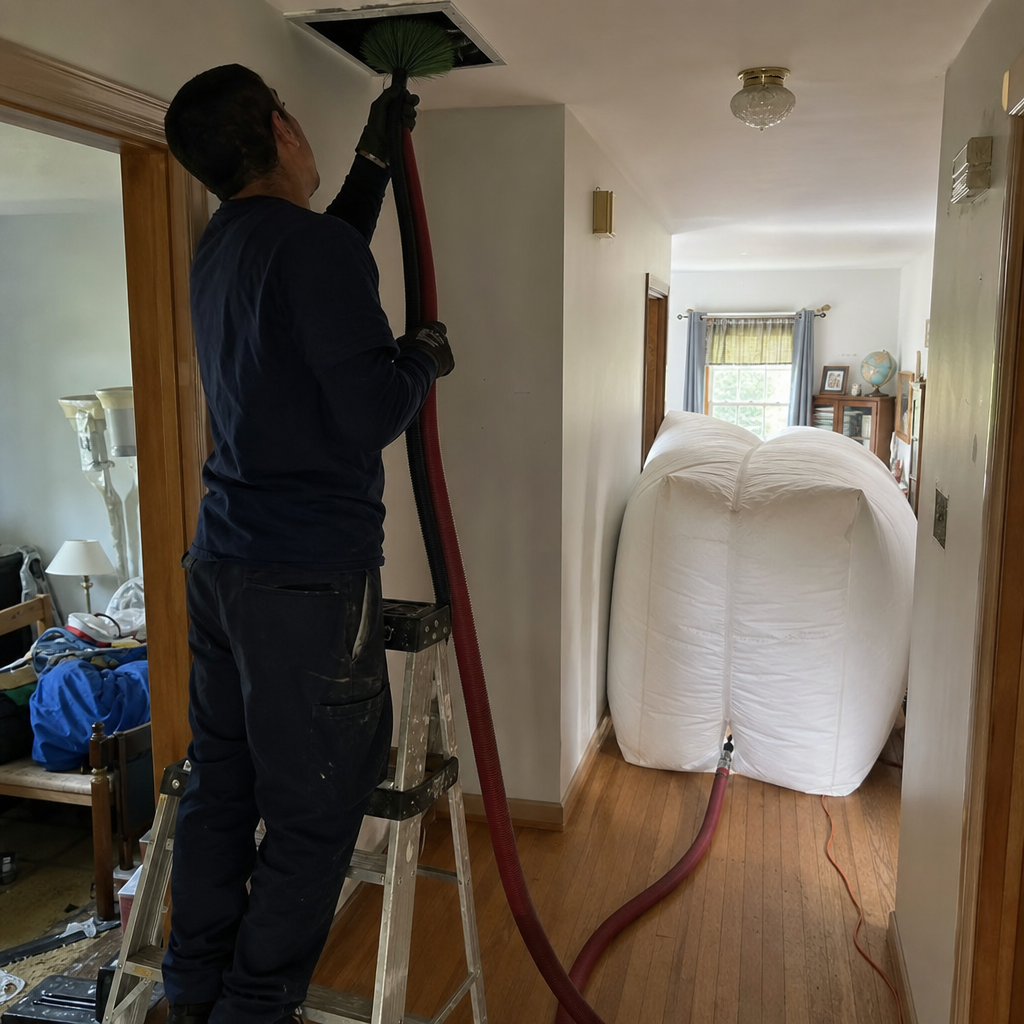
The EPA Quote Everyone Misuses — And What It Actually Means for Your Home
In 1997, the EPA stated that duct cleaning “has never been shown to prevent health problems.” That statement is technically correct. It’s also been weaponized by discount cleaning crews and ignored by fear-based marketers ever since. Here’s what neither side tells you: that EPA guidance specifically addresses preventive cleaning of systems with no known contamination. It does not apply to remediation — the removal of actual pollutants that are already present and circulating.
Matthew Gonzalez, our owner and lead technician, has spent 20 years pulling the kinds of things out of Connecticut duct systems that make the distinction obvious. Dead rodents in rural Litchfield County farmhouses. Visible mold colonies behind registers in shoreline homes where humidity seeps through crawl spaces. Bird nests — complete with eggs, in one memorable case — in a 1920s colonial near Hartford. Construction dust so thick it had formed a felt-like mat across the return trunk of a renovated Greenwich property. These are not “preventive” scenarios. These are systems where something specific needs to come out, and the EPA’s 1997 statement about routine cleaning has zero relevance.
The honest answer to “is it worth it” depends entirely on which category your home falls into. We’ve developed a straightforward way to help you self-identify.
When Duct Cleaning Is Worth the Investment
- Visible mold growth inside hard-surface ducts or on other HVAC components — not surface mildew on a register, but colony growth in the trunk line or near the air handler.
- Evidence of rodent or insect infestation — droppings, nesting material, or the smell of urine when the system runs. This is more common in Connecticut than most homeowners realize, especially in homes near wooded areas or with crawl space access.
- Post-renovation dust infiltration — even with contractors who seal well, drywall dust, insulation particles, and sawdust find their way into returns during major remodels.
- Excessive dust accumulation on furniture shortly after cleaning — a sign the duct system is recirculating particulate rather than filtering it properly.
- Unexplained allergy symptoms that worsen when the HVAC runs — particularly in fall and spring when Connecticut’s pollen loads are already high.
- Original ductwork in homes built before 1985 — decades of cumulative buildup, often including asbestos insulation debris in very old systems, makes these prime candidates.
When It’s Probably Not Worth It Right Now
- Newer homes (under 10 years) with no complaints — ducts simply haven’t had time to accumulate meaningful debris.
- Systems cleaned within 3-5 years with good filter maintenance — a quality pleated filter changed on schedule does most of the preventive work.
- When the air quality issue is clearly sourced elsewhere — basement moisture problems, pet dander on surfaces, or outdoor pollution penetrating windows will not be solved by duct cleaning, and we’ll tell you so.
We’ve turned down jobs where the homeowner’s issue was clearly a humidifier set too high or a filter that hadn’t been changed in two years. That’s not noble — it’s just accurate. A technician who can’t tell you “not yet” isn’t worth trusting when they eventually say “yes.”
Connecticut’s Housing Stock Tilts the Odds — Here’s Why
Connecticut’s architectural landscape works against clean ducts in ways that newer Sun Belt states simply don’t face. The state has one of the oldest housing stocks in the nation — roughly 35% of homes were built before 1960, and a significant portion of the remainder went up between 1960 and 1990 with duct materials and sealing standards that don’t hold up to modern scrutiny.
In New Haven’s Fair Haven neighborhood, where Matthew grew up, the triple-deckers and century-old heating conversions tell a familiar story: gravity furnaces replaced with forced-air systems, ducts shoehorned into spaces never designed for them, and decades of layered modifications by owners who prioritized function over airflow design. Those systems work, but they accumulate. Fibrous glass duct liner in older trunks traps debris. Original duct tape — the cloth kind, not modern foil-backed — degrades and allows suction of attic or crawl space air. We’ve found squirrel caches in attics that were being actively pulled into return lines through gaps no homeowner could see from below.
The climate compounds this. Connecticut’s sharp seasonal swings mean heating systems run hard for five months, then sit idle while humidity rises through summer. That cycle — hot, cold, humid, dry — creates ideal conditions for organic growth in any system with residual moisture or debris. Shoreline towns from Old Saybrook to Stamford deal with salt-laden humidity. Northwest hills see extended shoulder seasons where systems cycle irregularly, preventing consistent airflow that would otherwise self-clear light dust.
This isn’t fear-mongering. It’s the mechanical reality of maintaining forced-air equipment in a 120-year-old house through New England weather. The “worth it” calculation changes when your infrastructure starts with these conditions.
What We Actually Find: A 20-Year Field Report
Matthew’s seen the full spectrum, and the distribution isn’t what most homeowners expect. Roughly 15% of systems we inspect are genuinely clean — a recent build, conscientious filter changes, no incidents. Another 25% show light accumulation that we flag as “monitor, not urgent.” The remaining 60% have something worth addressing: significant dust loading, debris from a known or unknown source, or mechanical issues like disconnected ducts that are wasting energy and circulating unconditioned air.
The worst cases aren’t subtle. A West Hartford homeowner called because “the house always smells like the basement.” The return trunk had separated from the air handler, pulling musty crawl space air directly into circulation — for three years. A Farmington family with a child experiencing respiratory issues had a filter slot that was never properly sealed during a furnace replacement, bypassing filtration entirely. In both cases, air duct cleaning was only part of the solution; the real value was finding and fixing the source.
We’ve also seen pristine 1950s systems where a single original owner changed filters religiously and never had an incident. We told those homeowners to check back in five years. The point isn’t that every old system needs cleaning — it’s that Connecticut’s age demographics and climate make the probability of contamination higher than national averages, and a professional inspection is the only way to know your specific situation.
If you haven’t thought about what’s inside your ducts, your ducts have been thinking about it for you.
The Falsifiable Claim: Before-and-After Air Quality Testing
Here’s where our approach diverges from franchise operations that run a vacuum hose and hand you an invoice. Matthew can perform particulate testing before and after cleaning — actual airborne particle counts measured with calibrated equipment, not a flashlight beam and a confident nod. If the numbers don’t show meaningful improvement, he’ll tell you. This is not a marketing gesture; it’s a accountability mechanism that most competitors cannot offer because they don’t test at all.
We use Abatement Technologies particle counters and Guardsman sanitizing treatments where testing indicates biological contamination. The equipment is the same tier used in medical and industrial settings — not consumer-grade air quality gadgets. When we document a 60-80% reduction in airborne particulate post-cleaning, as we commonly see in contaminated systems, that’s a measurable outcome you can verify independently.
The testing adds cost — typically $150-250 depending on system size — but it transforms the service from faith-based to evidence-based. For homeowners who are genuinely unsure whether cleaning will help, it’s the most direct way to answer the question. If preliminary testing shows your ducts aren’t the problem, we pivot to identifying what is.
What Does Air Duct Cleaning Cost in Connecticut — And What Drives the Range?
Pricing transparency matters when you’re evaluating whether the service is “worth it.” Below is what we typically see in the Connecticut market for legitimate, equipment-serious work. The low end of each range generally reflects smaller homes with straightforward access; the high end covers larger systems, multiple HVAC units, or conditions requiring remediation-grade procedures.
| Service Component | Typical Connecticut Range | What Affects Price |
|---|---|---|
| Standard residential duct cleaning (single system) | $400 – $700 | Number of registers, duct material (flex vs. hard pipe), accessibility |
| Larger home or multi-zone system | $700 – $1,200 | Additional air handlers, complex trunk layout, finished basement access constraints |
| Pre/post air quality testing | $150 – $250 | Number of sampling points, lab analysis if mold identification needed |
| Mold remediation or sanitizing treatment | $200 – $500 additional | Extent of contamination, EPA-registered antimicrobial application, containment requirements |
| Duct repair or sealing (per issue found) | $150 – $600 | Disconnected runs, deteriorated seals, access difficulty |
Be wary of advertised prices below $300. We’ve inspected systems “cleaned” by coupon crews who ran a shop vac through two registers and called it complete. Proper cleaning with Rotobrush and Nikro equipment — the commercial systems we use — requires 3-5 hours for a thorough job, plus setup and breakdown. At legitimate labor rates in Connecticut, the math doesn’t work for bargain pricing unless corners are being cut.
Call (866) 531-5603 for an exact quote based on your system — estimates are free, and we’ll scope the work in person rather than guessing over the phone.
Common Connecticut Scenarios: Where Homeowners Typically Land
Rather than generic feature lists, here are the situations we encounter repeatedly across the state. See which sounds closest to your home.
The Pre-Listing Clean
Home sellers in Fairfield County, especially in competitive markets like Stamford or Greenwich, increasingly schedule duct cleaning before listing. It’s not because the ducts are necessarily contaminated — it’s because buyers’ inspectors are flagging dirty registers or musty startup smells, and a documented cleaning with before/after photos removes negotiation leverage. Worth it? Almost always, for the transaction smoothness alone.
The Post-Renovation Reset
A Westport family gutted their 1970s kitchen and two baths, used reputable contractors, and still found drywall dust coating interior windowsills six months later. The return registers had been active during construction, pulling fine particulate deep into the system. Cleaning restored normal dust levels within two weeks. This is one of the highest-ROI scenarios we see — the debris is recent, concentrated, and clearly sourced.
The Mystery Allergy Case
A couple in Middletown contacted us after their allergist ruled out typical triggers but noted symptoms worsened October through April — heating season. Testing showed elevated dust mite particulate and minor mold spores in the bedroom register airflow. Cleaning plus filter upgrade to Aprilaire media resolved the pattern. Worth it? For this household, decisively — but only because we tested and confirmed the duct contribution rather than assuming.
The “We Just Moved In” Discovery
New homeowners in older Connecticut towns — think Bristol, Meriden, Torrington — frequently have no maintenance history for the HVAC system. Our inspection often reveals the last cleaning was never, or was decades ago. These are unpredictable: sometimes surprisingly clean, sometimes containing debris from prior owners’ pets, smoking, or neglected filters. An inspection is always warranted; cleaning follows from what we find.
The Rural Rodent Episode
Homes with field or wooded borders — common in Litchfield, Tolland, and Windham counties — occasionally discover mice or chipmunks have accessed crawl spaces and from there, ductwork. The signs are unmistakable: droppings in registers, odor when heat activates, or in one case, a homeowner who heard scratching and found a nest in the return trunk. Cleaning is mandatory here, but it’s remediation, not maintenance — and typically requires sealing access points to prevent recurrence.
How to Evaluate Any Duct Cleaning Company (Including Ours)
If you’re deciding whether the service is worth it, you’re also deciding who to trust. A few specific criteria separate legitimate operators from the rest:
- They inspect before quoting definitively. Phone estimates without seeing your system are guesses. We provide ranges by phone but firm quotes only after visual assessment.
- They can explain what equipment they use and why. “Commercial-grade” means nothing. Rotobrush and Nikro are specific manufacturers with track records; ask any competitor to name their equipment.
- They offer documentation. Photos from inside your ducts, before/after testing, or both. If they can’t show you what they found, how do you know what was done?
- They carry proper coverage. We’re fully insured — no specific certificate number needed to verify that the policy exists and is current.
- The same person quoting does the work. With Elite, Matthew handles your job personally — owner on-site, every time. Franchise dispatch models send whoever’s available that day.
Our home page details our full service range, and our Air Duct Cleaning in Connecticut page covers the technical process in depth. For this specific “worth it” question, though, the evaluation criteria above matter more than any sales pitch.
FAQs
Yes — if your home has specific risk factors common in Connecticut, including pre-1985 construction, known rodent activity, post-renovation dust, or visible mold near HVAC components. For newer homes with no complaints and good filter maintenance, the value is lower unless testing indicates a hidden issue. Call (866) 531-5603 for a free assessment to determine your specific situation.
Professional residential duct cleaning in Connecticut typically ranges from $400 to $700 for a standard single-system home, with larger or more complex systems reaching $700 to $1,200. Add $150-250 for before/after air quality testing and $200-500 additional if mold remediation or sanitizing is needed. Prices below $300 often indicate incomplete service. Call (866) 531-5603 for an exact quote — estimates are free.
It can — when the ducts are actually contributing to allergen load. We’ve documented significant particulate reduction in contaminated systems, but cleaning won’t help if your triggers are pets, outdoor pollen, or basement moisture. Matthew’s pre-cleaning air quality testing identifies whether your ducts are the source before you spend money. If they’re not, we’ll tell you what to address instead.
Every 3-5 years for typical homes with standard risk factors, sooner if you have pets, recent renovations, or live in a high-humidity zone like the Connecticut shoreline. Homes built before 1985 with original ductwork should be inspected every 2-3 years. The best indicator isn’t the calendar — it’s an inspection that evaluates current condition against your home’s specific risk profile.
Cleaning is almost always cheaper — typically $400-1,200 versus $3,000-8,000+ for partial or full duct replacement. Replacement becomes worth considering only when ducts are deteriorated (rusted metal, collapsed flex, or asbestos-containing materials in pre-1980 systems) or improperly sized for current equipment. We clean and repair before recommending replacement, and we’ll show you exactly why if replacement is genuinely needed.
If you’d rather have it looked at, Elite Air Duct Cleaning Service Connecticut offers a no-pressure assessment in Connecticut — call (866) 531-5603 for a free estimate. Matthew handles your job personally, and if your ducts don’t need cleaning, we’ll tell you straight.
Written by Matthew Gonzalez, Owner & Lead Technician at Elite Air Duct Cleaning Service Connecticut, serving Connecticut, CT.