
Last updated July 10, 2026
Air Duct Cleaning Permits, Codes & Inspections in CT: What You Need to Know
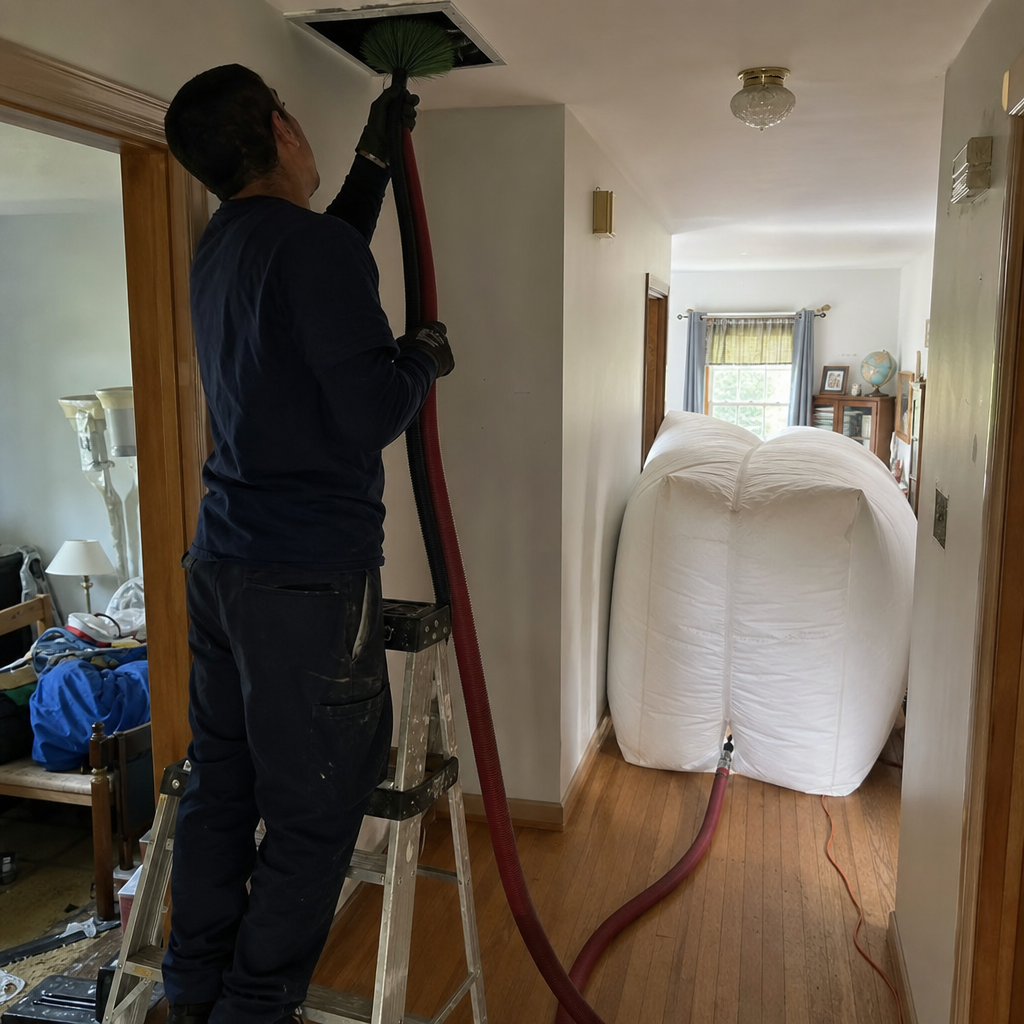
Here’s what surprises most Bridgeport homeowners: the duct cleaning itself—the mechanical brushing and vacuuming of your existing system—rarely triggers a permit. But the moment a contractor cuts into your ductwork, installs an access panel, or treats mold-affected sections, Connecticut’s regulatory framework kicks in hard. We’ve seen too many homeowners in the Black Rock and Brooklawn neighborhoods finish a renovation, schedule what they thought was a routine cleaning, and discover at closing that their contractor’s work lacked the documentation required for a legal sale. This guide draws the precise line between permit-exempt cleaning and regulated modification—so you know what questions to ask before anyone touches your system.
Quick Answer
Standard air duct cleaning in Connecticut does not require a building permit because it’s classified as maintenance, not construction. However, if your job involves duct modification, mold remediation, access panel installation, or follows a renovation in a pre-1978 home, permit and licensing requirements apply—and your contractor must carry the correct credentials. In Bridgeport, the Building Department enforces these rules at the local level, while state codes govern the technical standards.
Table of Contents
- The Critical Difference: Cleaning vs. Remediation in Connecticut
- What Connecticut’s Mechanical Code Says About Duct Work
- When Bridgeport’s Building Department Gets Involved
- Post-Renovation Duct Cleaning: Lead, Asbestos & Hidden Traps
- Documentation That Satisfies Home Inspectors & Buyer’s Attorneys
- Contractor Licensing: What to Verify Before Hiring
- Common Mistakes to Avoid
- When to Call a Professional
- Frequently Asked Questions
The Critical Difference: Cleaning vs. Remediation in Connecticut
Connecticut’s Department of Consumer Protection draws a sharp legal line between these two activities, and crossing it without the right license exposes homeowners to liability they rarely anticipate.
Cleaning is purely mechanical: agitation and extraction of accumulated debris from intact ductwork. No chemicals penetrate the system. No materials are removed or replaced. Under Connecticut General Statutes, this falls under maintenance activity—no contractor license beyond standard business registration is required.
Remediation triggers an entirely different regulatory regime. In our 20 years working Bridgeport homes, we’ve encountered these scenarios repeatedly:
- Mold-affected ductwork: If your contractor applies antimicrobial treatments, removes contaminated sections, or treats areas beyond 10 square feet of visible growth, Connecticut requires a mold remediation license under CGS § 20-481. The contractor must follow EPA guidelines and document a post-remediation verification plan.
- Water damage restoration: Ducts saturated from flooding or burst pipes require drying protocols that intersect with Connecticut’s water damage restoration regulations—separate from standard cleaning.
- Fire and smoke restoration: Post-fire duct cleaning in Bridgeport’s older housing stock often involves removing soot-impregnated insulation and replacing sections, which qualifies as restoration work requiring additional certification.
Here’s where homeowners get caught: a contractor quotes “duct cleaning” but discovers mold during the job. Without the proper mold remediation license, they cannot legally treat it. Some proceed anyway, leaving you with undocumented work that fails inspection if you later sell. Others stop mid-job, forcing you to hire a second contractor at premium rates.
In our experience across Bridgeport’s coastal climate zones—where summer humidity pushes indoor moisture levels high enough to trigger condensation in ductwork—this distinction matters practically, not just legally. We’ve inspected systems in the East End where previous “cleaning” contractors applied antimicrobial fogging without proper containment, spreading spores through the entire house.
What Connecticut’s Mechanical Code Says About Duct Work
Connecticut adopts the International Mechanical Code with state amendments, and several provisions directly affect what happens during—and adjacent to—a duct cleaning appointment.
Access panel installation (IMC 305.1): Professional cleaning requires entry points into your duct system. If your home lacks sufficient access panels, we must cut them. Under Connecticut’s amended IMC, any new access panel in a supply or return duct constitutes a modification requiring compliance with:
- Proper sealing standards (IMC 603.9) to prevent air leakage
- Material compatibility with existing duct construction
- Structural integrity—panels cannot compromise duct support
Small access panels under specific dimensions may qualify as minor work exempt from permit, but the threshold is narrow. In Bridgeport, where many homes still contain original galvanized ductwork from the 1950s-1970s, cutting access holes without proper reinforcement can collapse sections of the system.
Duct repair and sealing (IMC 603): When cleaning reveals disconnected joints, corroded sections, or failed seals, repair work crosses into regulated territory. Connecticut requires:
- Mechanical fasteners or approved mastic—not tape alone—for permanent repairs
- Pressure testing for duct systems in new construction or substantial renovation
- Fire-resistant materials where ducts penetrate rated assemblies
We’ve replaced entire sections of deteriorated flex duct in North End Bridgeport homes where previous cleaners simply vacuumed around the damage, leaving the homeowner with the same efficiency losses and contamination pathways.
Combustion air and venting (IMC 701-804): Any duct work near fuel-burning appliances triggers additional code layers. In Bridgeport’s dense neighborhoods—particularly the South End’s multi-family conversions—we’ve encountered water heaters and furnaces with improperly sealed return plenums. Cleaning these systems without addressing the combustion safety issue violates both mechanical code and basic professional duty.
When Bridgeport’s Building Department Gets Involved
Bridgeport’s Building Department operates under the Connecticut State Building Code, with local amendments primarily addressing flood zone construction and historic district requirements. For duct work, the permit trigger points are:
| Work Type | Permit Required? | Bridgeport Specifics |
|---|---|---|
| Mechanical cleaning only | No | Standard maintenance; no filing needed |
| Access panel installation (minor) | Sometimes | Exempt if under 144 sq in; otherwise, mechanical permit |
| Duct section replacement | Yes | Mechanical permit; inspector verification required |
| Mold remediation >10 sq ft | Yes | Remediation plan filed with health department |
| Post-renovation in pre-1978 home | Possible | Lead-safe work documentation required |
| Dryer vent routing changes | Yes | Mechanical permit; must meet current venting lengths |
Bridgeport’s permit turnaround averages 5-10 business days for mechanical work—faster than Hartford or New Haven, but still a timeline to factor into project planning. Emergency repairs affecting heating systems in winter can sometimes obtain same-day approval, but this requires contractor-initiated contact, not homeowner walk-ins.
One Bridgeport-specific consideration: homes in the Historic District overlay zones (including portions of the Downtown North and South areas) face additional review if duct modifications affect exterior appearance—rare for interior work, but relevant if your system requires new exterior vent terminations.
We’ve worked with Bridgeport’s building officials on complex jobs, and the consistent message is clear: they care less about the cleaning itself than about whether the work altered the system’s safety or efficiency characteristics. Documentation of what was and wasn’t changed matters enormously.
Post-Renovation Duct Cleaning: Lead, Asbestos & Hidden Traps
This is where Bridgeport’s housing stock—among the oldest in Connecticut—creates regulatory complexity that catches even careful homeowners unaware.
The pre-1978 trigger: If your home was built before 1978 and you’re having duct work done after any renovation that disturbed painted surfaces, federal EPA RRP (Renovation, Repair, and Painting) rules apply. Connecticut enforces these through the Department of Public Health. Your duct cleaning contractor doesn’t need RRP certification themselves—but if they’re working in a home where lead dust may have entered the system, they need to coordinate with the renovation contractor’s containment and cleaning verification.
We’ve cleaned ducts in Brooklawn and West End homes where the kitchen renovation contractor completed beautiful cabinet work but never properly isolated the HVAC returns. The result: lead-contaminated dust circulated through the entire system for weeks before the homeowner called us. In these cases, standard cleaning isn’t sufficient—we’re dealing with hazardous material cross-contamination that requires:
- HEPA-contained negative-pressure cleaning (our Nikro equipment supports this)
- Post-cleaning surface wipe testing in multiple zones
- Documentation that the system was brought back to habitable condition
Asbestos in older ductwork: Bridgeport’s industrial-era homes sometimes contain asbestos-containing materials (ACM) in duct insulation, vibration dampeners, or register boots. Disturbing these during cleaning without proper abatement contractor involvement violates both EPA NESHAP and Connecticut DEP regulations. We identify suspected ACM before work begins and halt if found—no exceptions.
The documentation gap: Home inspectors in Bridgeport’s active real estate market increasingly flag duct systems in flipped properties. If your renovation contractor cleaned the ducts but can’t produce documentation showing the work addressed potential lead or asbestos exposure, your buyer’s attorney may demand a full system inspection or credit at closing. We’ve provided third-party verification letters for numerous Bridgeport sales, documenting what our Rotobrush and Nikro systems extracted and what condition we found.
Documentation That Satisfies Home Inspectors & Buyer’s Attorneys
In Bridgeport’s competitive real estate market, documentation quality directly affects transaction speed. Here’s what we’ve learned producing reports that survive attorney and inspector scrutiny:
Before-and-after visual evidence: Not marketing photos—technical documentation. We photograph access panel locations, internal duct conditions at multiple points, and post-cleaning verification. These images carry timestamps and GPS metadata.
Scope-of-work specificity: Vague invoices reading “cleaned ducts” create suspicion. Our documentation specifies:
- Number of supply and return vents serviced
- Linear feet of ductwork cleaned
- Equipment used (Rotobrush brush-and-vac system, Nikro HEPA extractors)
- Any repairs or sealing performed, with material specifications
- Air quality measurements before and after, when testing is requested
Mold and moisture documentation: If we encounter conditions suggesting mold, we document without treating—then refer to licensed remediators. This protects all parties: the homeowner gets proper remediation, the eventual buyer gets clean documentation, and we maintain our license standing.
Equipment calibration records: For commercial and multi-family jobs in Bridgeport, we maintain logs showing our Abatement Technologies and Guardsman application equipment is calibrated to manufacturer specifications. This matters for properties with insurance or warranty requirements.
One practical note: Bridgeport’s home inspectors have told us directly that they value contractor documentation that includes what wasn’t done as much as what was. If we inspect a system and recommend repairs that the homeowner declines, we note this. It protects everyone from post-sale disputes.
Contractor Licensing: What to Verify Before Hiring
Connecticut’s contractor licensing framework creates specific requirements that vary by the work type. For duct-related services, verify these credentials:
| Work Type | Required License/Certification | Verification Method |
|---|---|---|
| Standard duct cleaning | Business registration | CT Secretary of State business search |
| HVAC system modification | S-1, S-2, or D-2 license | CT DCP license lookup |
| Mold remediation | Licensed remediator | CT DCP mold program registry |
| Asbestos abatement | Asbestos abatement supervisor | CT DPH asbestos program |
| Lead-safe work (pre-1978) | EPA RRP certification | EPA firm lookup tool |
Red flags we’ve encountered in Bridgeport: contractors performing “cleaning” that includes antimicrobial fogging without mold remediation licensing; crews cutting access panels without mechanical competency; and franchise operations where the technician on your job holds no individual credentials, only corporate insurance.
Matthew handles your job personally—owner on-site, every time. That means the person with 20 years of duct system experience is the one assessing whether your job stays in permit-exempt territory or crosses into regulated work. We’ve declined jobs where the scope exceeded our licensing, referring homeowners to properly credentialed specialists rather than risking their legal exposure.
Common Mistakes to Avoid
- Hiring based on lowest price without verifying license scope. A $99 duct cleaning special won’t include proper documentation for real estate transactions, and the contractor may lack credentials if mold or damage is discovered.
- Assuming post-renovation cleaning is purely cosmetic. In Bridgeport’s pre-1978 housing stock, renovation dust often contains regulated materials. Cleaning without proper assessment can spread contamination.
- Allowing access panel installation without asking about permits. Even small panels may require mechanical permits depending on location and duct type. Unpermitted work surfaces in home inspections.
- Accepting verbal assurances about mold. Connecticut requires written remediation plans for mold-affected areas over 10 square feet. Any contractor treating mold without documentation is operating illegally.
- Neglecting to request equipment specifications. Consumer-grade shop vacuums don’t achieve the negative pressure and HEPA filtration that commercial systems like our Nikro extractors provide. Documentation of professional equipment matters for warranty and insurance claims.
- Failing to coordinate with your renovation contractor. The cleanest ducts won’t satisfy a buyer’s attorney if the renovation work that preceded them lacked proper lead-safe documentation.
When to Call a Professional
Call for professional assessment when: you’ve completed any renovation in a pre-1978 Bridgeport home; you can see visible mold or smell musty odors from vents; your system hasn’t been cleaned in 5+ years and you’re preparing to sell; a home inspector flagged duct conditions; or you’ve experienced water damage, fire, or pest infestation affecting the system. Two decades of duct systems means we’ve seen—and fixed—just about everything. Elite Air Duct Cleaning Service Connecticut offers free estimates in Bridgeport—call (866) 531-5603. Matthew evaluates every job personally, and we’ll tell you honestly whether your situation requires standard cleaning, licensed remediation, or coordinated work with other specialists.
Frequently Asked Questions
No. Purely mechanical cleaning—brushing, vacuuming, and agitation of existing ductwork without modification—is classified as maintenance and requires no building permit anywhere in Connecticut, including Bridgeport. Call (866) 531-5603 if you’re unsure whether your specific situation qualifies as standard cleaning.
Duct cleaning removes accumulated debris from intact systems. Mold remediation addresses biological contamination, requires a state-issued remediation license under CGS § 20-481, and mandates written protocols for areas exceeding 10 square feet. In Bridgeport’s humid climate, we frequently find mold conditions that require referral to licensed remediators rather than standard cleaning.
Bridgeport follows Connecticut’s statewide building code, but homes in historic overlay districts may face additional review for exterior modifications. Pre-1978 homes require EPA RRP documentation if renovation preceded the duct work. The Building Department doesn’t require permits for cleaning alone, but does for duct replacement or new access panel installation beyond minor exemptions.
Request a detailed invoice specifying scope (number of vents, linear footage, equipment used), dated before-and-after photos with technical metadata, any air quality test results, and explicit notation of conditions found and recommendations declined. This satisfies most Bridgeport home inspectors and buyer’s attorneys. We provide this standard on every job—call (866) 531-5603 for specifics.
No. Access panel installation that exceeds 144 square inches or affects structural duct integrity requires mechanical competency and potentially a permit. We’ve corrected panels installed by unqualified contractors in Black Rock and North End homes that collapsed duct sections or created air leaks exceeding 20% of system flow.
Check the Connecticut Department of Consumer Protection license lookup for HVAC credentials (S-1, S-2, D-2), the mold remediation registry for biological work, and the Secretary of State for active business registration. For pre-1978 homes, verify EPA RRP certification through EPA’s online firm lookup. We maintain all relevant credentials and provide verification on request—call (866) 531-5603.
The Bottom Line
Connecticut’s regulatory framework for duct work is straightforward at its core: cleaning is maintenance, modification is construction, and remediation is a separate licensed discipline entirely. The complexity arises at the boundaries—where a routine cleaning discovers mold, where post-renovation work intersects with lead safety rules, or where access needs trigger mechanical code requirements. For Bridgeport homeowners, the practical protection is asking the right questions before work begins and choosing a contractor with the experience to recognize when a job has crossed into regulated territory. From cleaning to sealing to sanitizing—one call covers your entire duct system, honestly assessed and properly documented.
Written by Matthew Gonzalez, Owner & Lead Technician at Elite Air Duct Cleaning Service Connecticut, serving Bridgeport since 2006.