
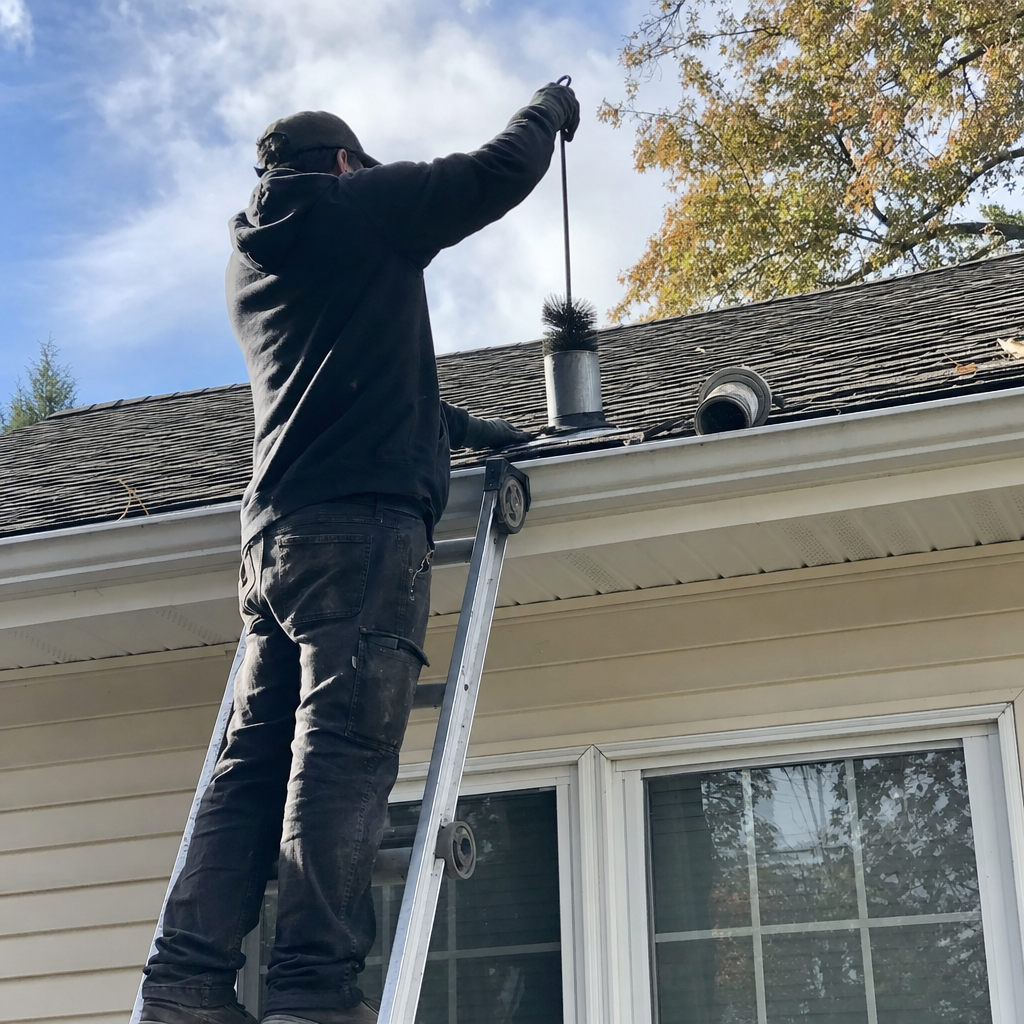
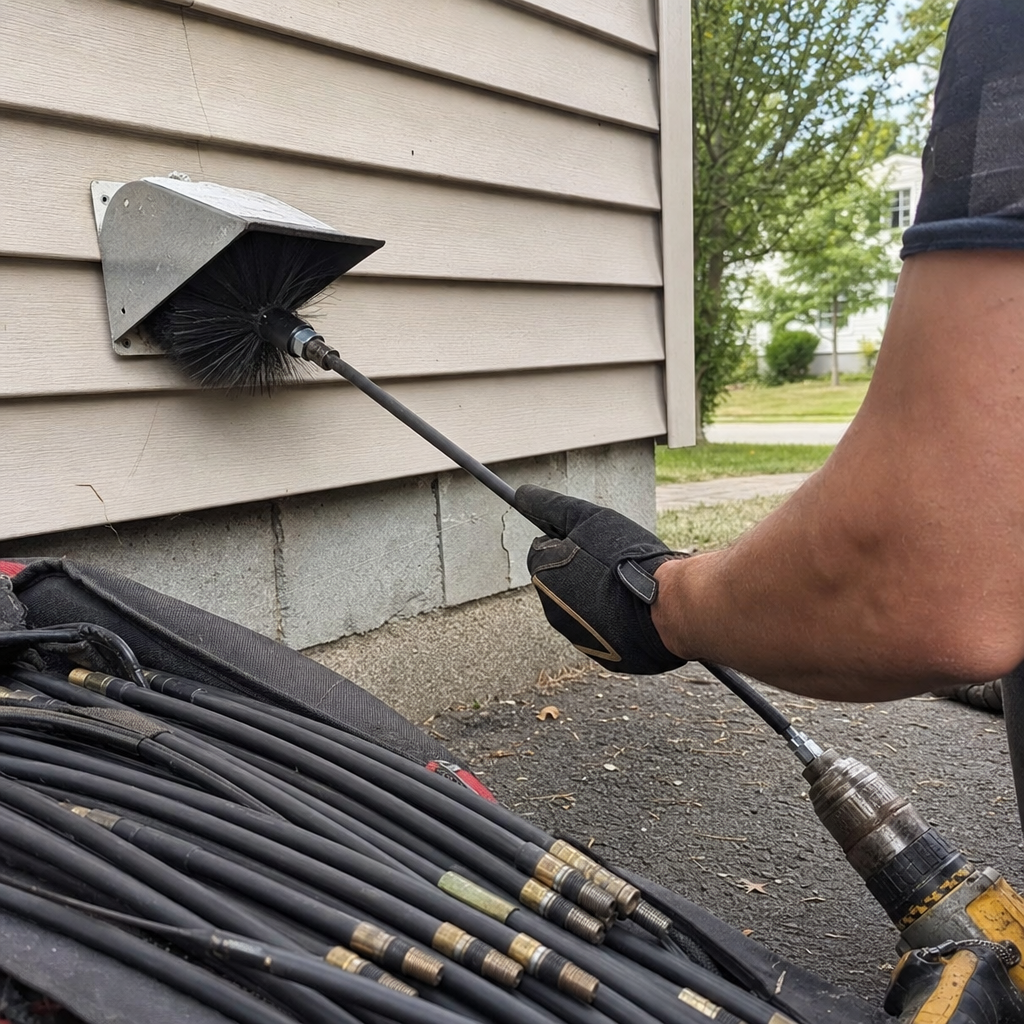
Fast, Reliable Dryer Vent Cleaning Across Longmeadow
Dryer vent cleaning in Longmeadow typically costs $180–$340 for standard residential service, with most jobs completed in under two hours. We’re usually on-site in Longmeadow within 24–48 hours of your call, sometimes same-day if you’re near the Longmeadow Street corridor or Forest Park area. Call (866) 531-5603 for a free estimate.
We’ve been driving out to Longmeadow from Bridgeport for years, and we’ve learned the town’s houses inside and out. The colonials and split-levels built from the late 1940s through the early 1970s — most of Longmeadow’s stock — carry original sheet-metal trunk-and-branch duct systems that share wall cavities with dryer vents roughed in during initial construction. That means decades of accumulated lint, gypsum dust from unsealed 1980s and 1990s renovations, and river-valley humidity have direct pathways to migrate between systems. It’s a unique fire and blockage risk you won’t find in newer suburbs, and it’s why Longmeadow homeowners need a technician who understands legacy housing, not a franchise crew with a vacuum and a checklist.
Matthew handles your job personally — owner on-site, every time. Two decades of duct systems means we’ve seen — and fixed — just about everything.
Why Elite Air Duct Cleaning Service Connecticut Is Longmeadow’s Preferred Dryer Vent Cleaning Company
Our reputation in Longmeadow was built job by job, not through mailers. We’ve cleaned dryer vents in the tree-lined neighborhoods off Longmeadow Street, in the split-levels near Bliss Park, and in the larger colonials tucked back on Forest Glen Road and surrounding streets. When your home’s vent system dates to the Eisenhower administration, you want the technician who recognizes a 1960s collar connection before he touches it.
Our Dryer Vent Cleaning team has earned 663 verified reviews averaging 4.9 stars — and Longmeadow customers specifically mention Matthew’s thoroughness with older systems. One recent review noted he spent extra time tracing a vent run through an unconditioned basement that three previous companies had missed entirely.
Response time to Longmeadow is typically next-day, with same-day availability for suspected blockages or burning smells. We know the route — I-91 north, exit onto Route 5 — and we don’t waste your morning with dispatch delays or subcontractor scheduling. The same technician who answers your questions on the phone is the one who shows up with the Rotobrush and Nikro equipment.
We use Rotobrush and Nikro equipment because your air quality isn’t a DIY project. These are the same commercial-grade systems used in industrial and medical settings — not the consumer vacuums some crews haul out of a trunk. For Longmeadow’s aging, extensive duct runs serving 20-plus registers across two floors, that difference matters.
Our Dryer Vent Cleaning Services in Longmeadow
Dryer Vent Inspection
A proper inspection in Longmeadow starts with understanding what decade your house was built. Homes from the 1950s through 1970s often have vent runs that share wall cavities with original heating ducts — a configuration that wasn’t problematic when new but becomes a liability after 50–70 years of joint corrosion and renovation dust migration. We run a Rotobrush camera through the full length of your vent, checking for gypsum dust accumulation from unsealed drywall work, separated collar joints from humidity-driven corrosion, and lint compaction in low-slope basement runs. In Longmeadow’s Connecticut River valley climate, we also document moisture staining and early mold colonization that valley humidity accelerates inside uninsulated ductwork. The inspection takes 30–45 minutes and includes a written findings report.
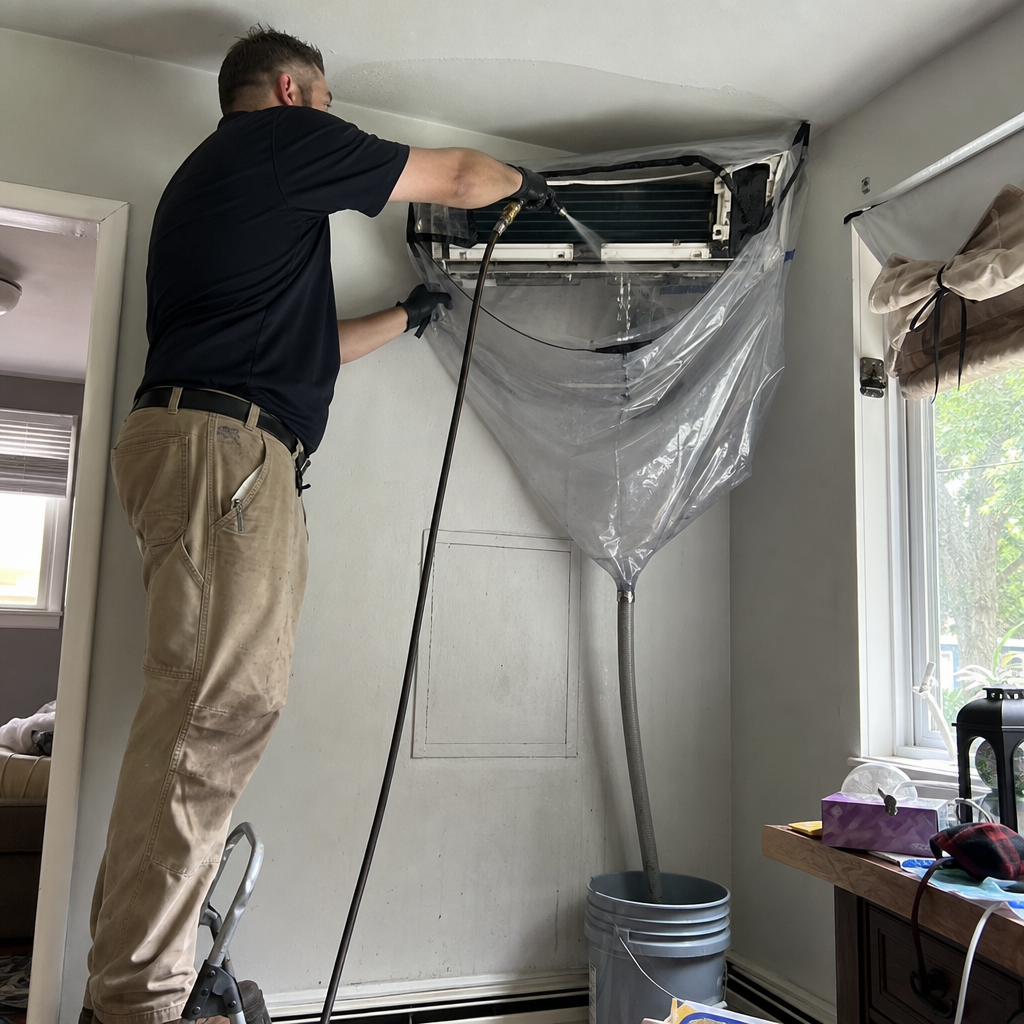
Vent Cleaning
Our vent cleaning process for Longmeadow homes accounts for the reality of legacy construction. Original 1950s–70s vent routing often includes long, low-slope runs through unconditioned basements — exactly where condensation and lint combine into moldy, restrictive plugs that standard cleaning heads can’t fully dislodge. We use Rotobrush mechanical agitation plus Nikro high-velocity extraction to break up compacted lint-gypsum mixtures and pull them out completely. For the extensive two-story systems common in Longmeadow’s large colonials, we work register by register to ensure no section is bypassed. Last fall we cleaned a dryer vent on Forest Glen Road in a 1965 split-level where the homeowner had noticed slow drying cycles. Our inspection via Rotobrush camera revealed a thick crust of gypsum dust from a 1990s kitchen reno mixed with lint, lodged just past the first elbow. We cleared the blockage, replaced the vent cap with a low-restriction model, and drying time dropped from 90 to 35 minutes.
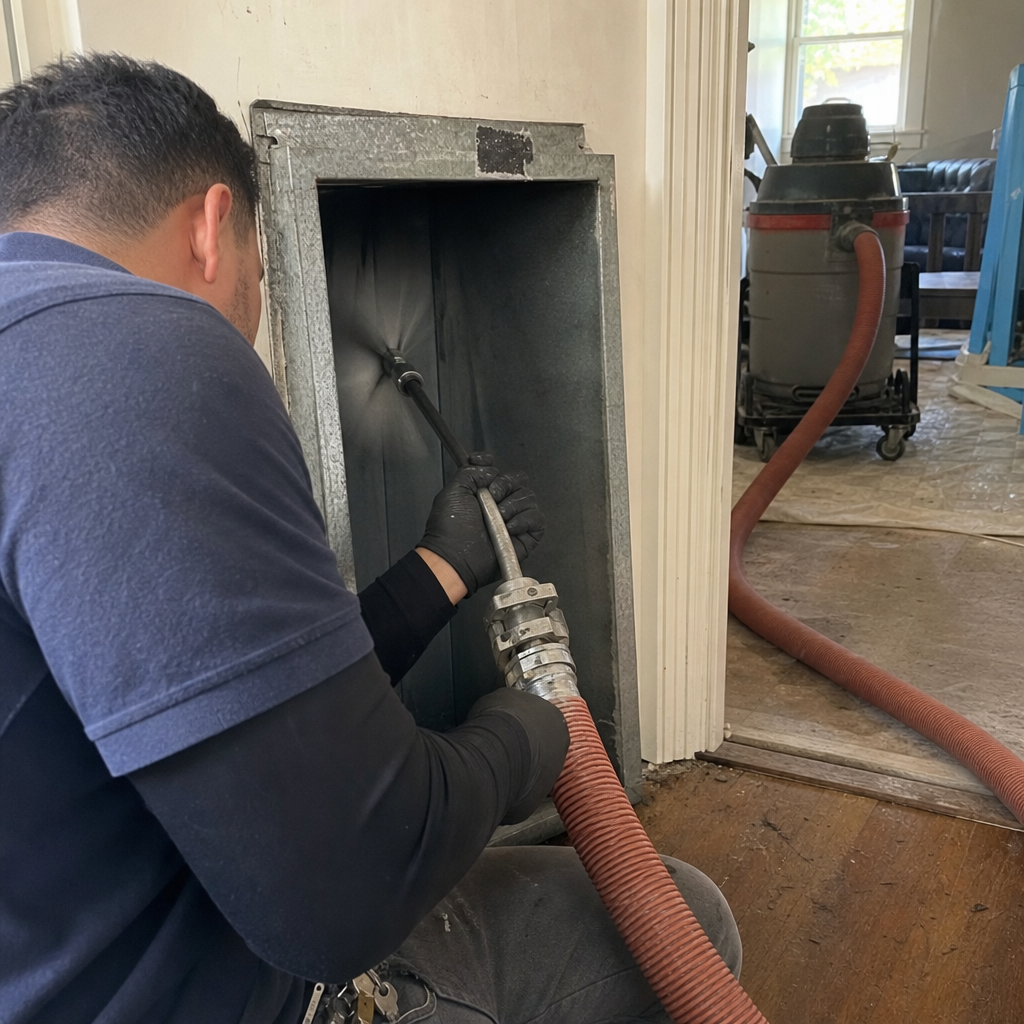
Lint Removal
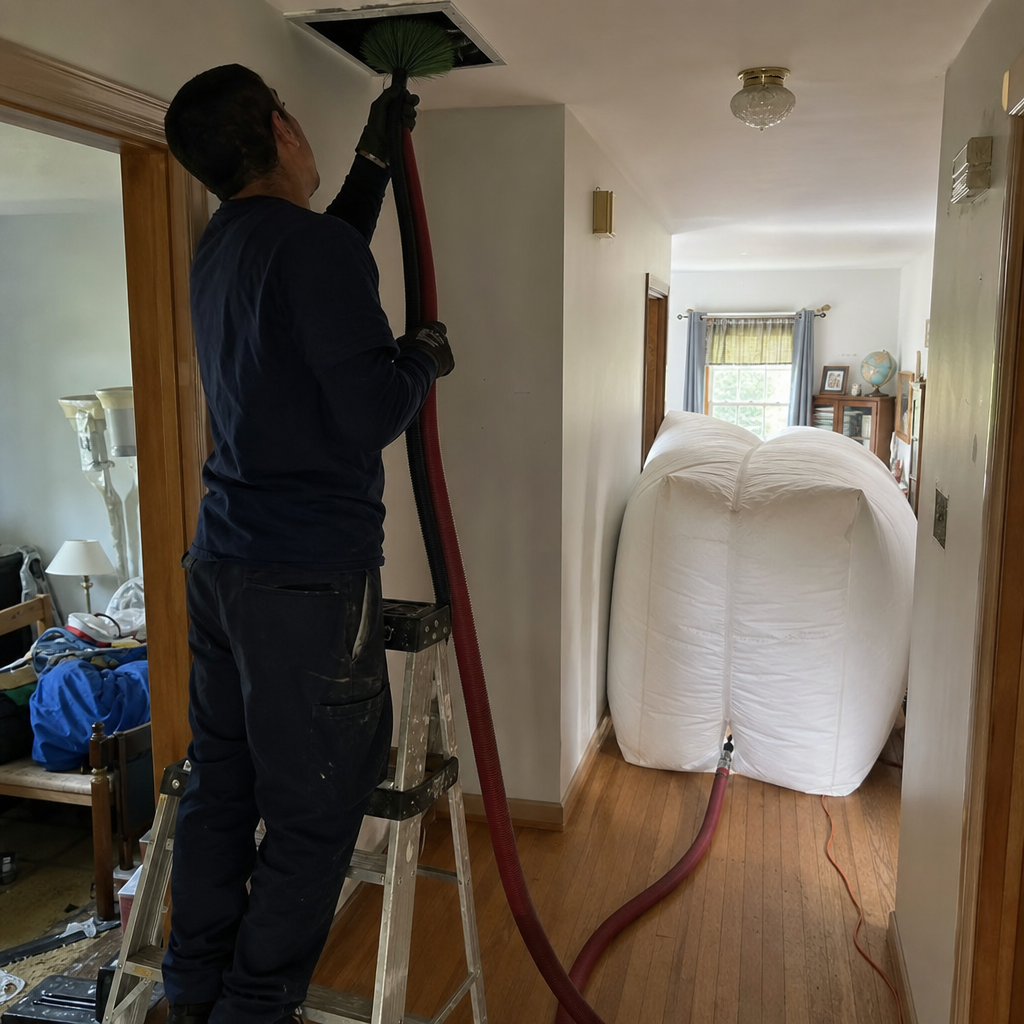
Lint removal in Longmeadow isn’t just about the visible trap. The town’s older housing stock means lint has had decades to accumulate in wall cavities, behind basement panels, and in shared duct pathways where original construction didn’t isolate systems. We extract lint from the full vent run — not just the accessible sections — using commercial extraction equipment that pulls debris rather than pushing it deeper. For homes that have undergone kitchen or bathroom renovations in the 1980s or 1990s, we specifically check for fine gypsum dust that has mixed with organic debris and humidity-driven biological growth, forming hard, dense blockages that restrict airflow and create fire hazards. The Longmeadow Fire Department has responded to dryer vent fires in these exact conditions.
Vent Rerouting
Sometimes cleaning isn’t enough. Original Longmeadow vent runs were designed for dryers that produced half the heat of modern units, and their low-slope basement paths through unconditioned space create chronic condensation problems that no amount of cleaning solves permanently. We reroute vents to shorter, straighter paths with proper slope and insulation — often exiting through rim joists rather than running 30+ feet across a damp basement. Rerouting eliminates the humidity trap that valley climate exacerbates and brings your system up to current safety standards. For homes on Longmeadow Street and in surrounding neighborhoods where basement configurations are similar house-to-house, we’ve developed rerouting approaches that minimize drywall repair and preserve original trim work.
Bird Guard Installation
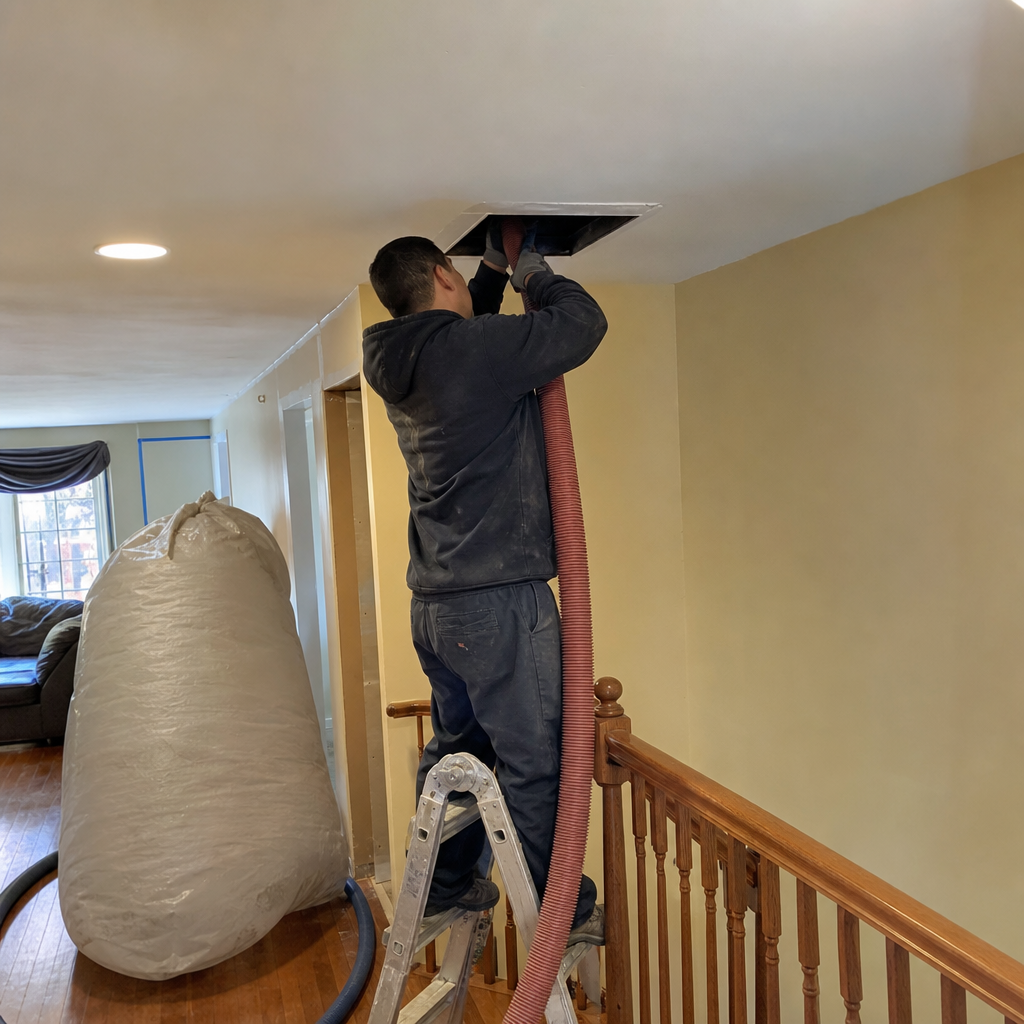
Longmeadow’s mature tree canopy and proximity to the Connecticut River floodplain mean active bird and squirrel populations. Standard vent caps without guards invite nesting material that blocks airflow and creates fire risks. We install low-restriction bird guards that maintain proper exhaust velocity while excluding wildlife — critical for homes near Forest Park and other wooded areas where cavity-nesting birds are common. The guards we use are designed for our northern climate: no plastic components that crack in freeze-thaw cycles, and screens fine enough to block songbirds without lint accumulation.
Vent Cap Replacement
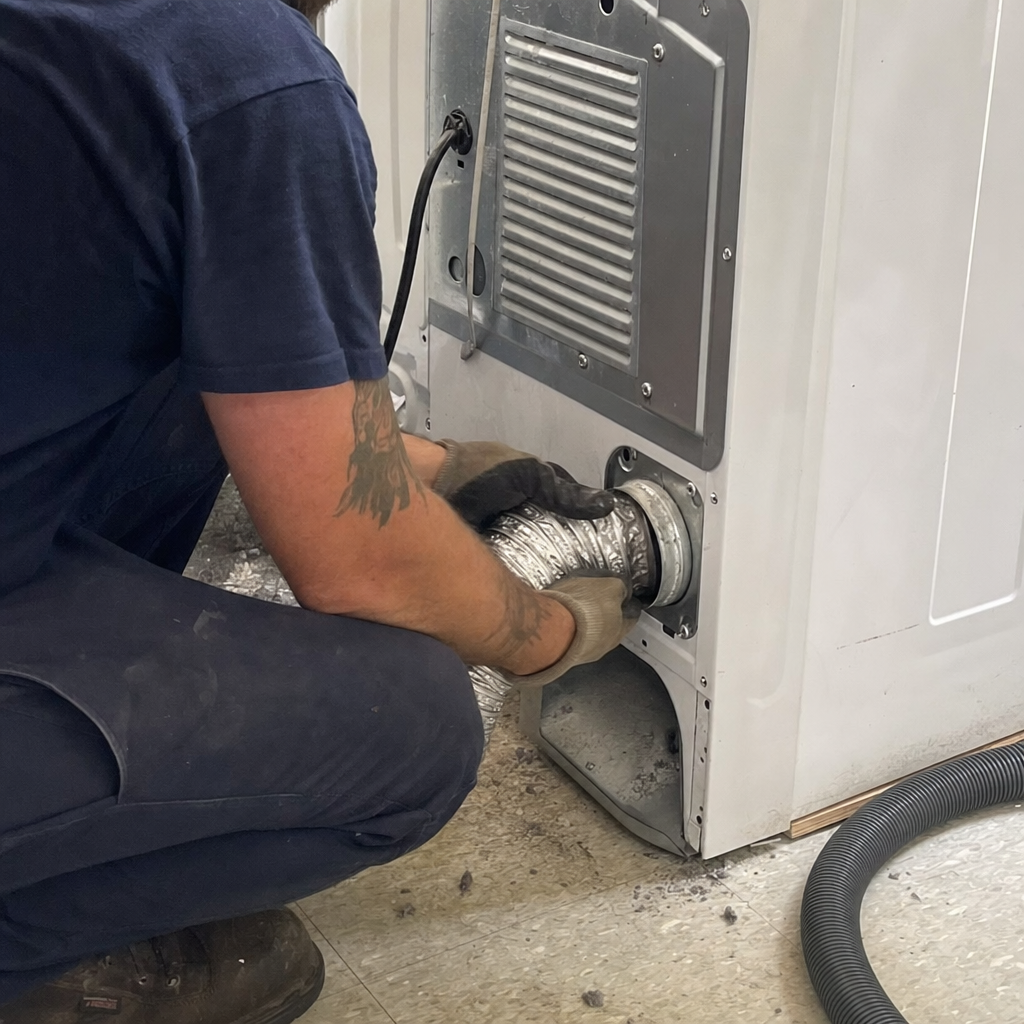
Original vent caps on Longmeadow homes are often corroded, stuck open, or missing louvers entirely — allowing rain, pollen, and pests direct entry into your system. Given the Pioneer Valley’s heavy pollen loads from surrounding farmland, a failed cap means your freshly cleaned vent loads up faster than in upland communities nearby. We replace with galvanized or aluminum caps rated for exterior exposure, properly flashed to prevent water intrusion into wall cavities that already face humidity challenges from the valley environment.
What happens when you call
- 1
A real person answersNo phone trees — you reach a local pro.
- 2
You get an upfront price rangeHonest numbers before anyone is dispatched.
- 3
A background-checked tech heads outLicensed & insured, dispatched right away.
- 4
You approve before work beginsNothing starts until you say go.
Trusted Brands We Service in Longmeadow
We carry replacement components from Rotobrush, Nikro, and Honeywell — brands we specify because they hold up in real field conditions, not just in catalogs. For Longmeadow’s older systems, parts availability matters: a 1960s collar size or a discontinued damper style can turn a simple repair into a multi-day hunt if your technician doesn’t stock legacy hardware. We do. Our Bridgeport warehouse maintains inventory of transition fittings, adjustable elbows, and vent caps that fit the dimensions common in Longmeadow’s post-war construction, meaning most replacements happen same-visit rather than stretching across two appointments. When sanitizing is needed after mold or rodent activity, we use Guardsman products formulated for HVAC applications — not consumer-grade sprays that leave residues.
Common Dryer Vent Cleaning Problems We See in Longmeadow Homes
- Gypsum dust blockages from unsealed renovations. Homes along the Longmeadow Street corridor that underwent kitchen or bathroom renovations in the 1980s or 1990s frequently had drywall work done without duct isolation. Fine gypsum dust packed into original 1950s–60s ductwork, then mixed with decades of lint and humidity-driven biological growth into dense, concrete-like plugs that standard cleaning misses.
- Long, low-slope basement runs with chronic condensation. Original 1950s–70s dryer vent routing often traverses 20–40 feet of unconditioned basement with minimal slope. In Longmeadow’s river-valley climate, these runs accumulate condensation that wets lint into moldy, restrictive masses — a problem you won’t see in drier upland towns or newer homes with shorter vent paths.
- Corrosion-separated joints dumping lint into wall cavities. Decades of elevated humidity from the Connecticut River valley accelerate corrosion on screw joints and collar connections. Vent segments separate inside walls, dumping lint into stud bays where it accumulates unseen — a hidden fire hazard that only camera inspection reveals.
- Shared duct pathways with original heating systems. In Longmeadow’s tightly residential, affluent enclave developed almost entirely between the late 1940s and early 1970s, a large share of homes still carry their original sheet-metal trunk-and-branch duct systems — now 50-70 years old — that have typically outlasted two or three furnaces but have rarely if ever been professionally cleaned. Combined with the town’s position in the Connecticut River valley, which funnels elevated outdoor humidity directly into these aging systems and accelerates interior mold and dust-mite accumulation, the case for duct cleaning here is more urgent and documentable than in newer suburbs just a few miles away.
Pricing for Dryer Vent Cleaning in Longmeadow, MA
Standard dryer vent cleaning in Longmeadow runs $180–$260 for a single-story vent with accessible termination. Two-story homes with longer runs — common in Longmeadow’s large colonials — typically fall in the $240–$340 range due to additional access work and extended cleaning time. Vent rerouting, when needed, generally adds $350–$650 depending on path length and drywall repair requirements. Bird guard installation is $85–$150 per cap, and vent cap replacement runs $120–$200 including hardware and labor.
What moves the needle: vent length and accessibility, presence of hard-compacted gypsum-lint mixtures requiring extended mechanical agitation, and whether camera inspection reveals hidden blockages or joint separations needing repair. We don’t quote over phone sight unseen — we inspect first, then present exact pricing before starting work. Estimates are free. Call (866) 531-5603 to schedule.
We Also Serve Cities Near Longmeadow
We regularly work across the Pioneer Valley, including Springfield, West Springfield, Agawam, and Chicopee. Each city shares Longmeadow’s river-valley humidity challenges but has distinct housing stock and vent configurations — we adjust our approach accordingly. If you’re in a neighboring community and dealing with slow drying cycles, burning smells, or visible lint around your vent termination, the same technician who handles Longmeadow’s legacy systems will come to you.
Serving Longmeadow, MA — Our Local Coverage Area
We’re based in the Longmeadow area and know this community well. Use the map below to see our service coverage — if you’re nearby, we can almost certainly help.
FAQs — Dryer Vent Cleaning in Longmeadow
Longmeadow’s homes built from the late 1940s through early 1970s typically have original vent runs that share wall cavities with heating ducts, use longer low-slope paths through unconditioned basements, and have accumulated decades of renovation debris — all factors that make blockages more likely and cleaning more involved than in newer construction. We specifically inspect for gypsum dust migration from unsealed 1980s–90s renovations and corrosion damage from valley humidity. Call (866) 531-5603 for a free inspection — estimates are free.
The valley acts as a natural humidity corridor, elevating indoor relative humidity that wets lint and promotes mold growth inside vents — especially in unconditioned basement runs. The valley also concentrates pollen from surrounding Pioneer Valley farmland, loading vent caps and interior surfaces faster than in drier, upland communities. We see this seasonally: spring pollen loads and summer humidity peaks both correlate with increased service calls from Longmeadow. Call (866) 531-5603 for a free estimate — we’ll check your specific vent condition.
If your vent exceeds 25 feet, has multiple elbows, or runs through an unconditioned basement with chronic condensation, rerouting typically pays for itself within 2–3 years through improved dryer efficiency and reduced fire risk. Cleaning alone can’t fix a fundamentally flawed path. We assess slope, insulation, and termination location during inspection, then give honest repair-versus-replace guidance with exact pricing for both options. Call (866) 531-5603 to schedule — estimates are free.
Yes, in most cases we can retrofit a compatible bird guard onto your existing cap if the cap itself is structurally sound and properly sized. If the cap is corroded, missing louvers, or an obsolete size, we recommend replacing both components as an integrated assembly. Longmeadow’s mature canopy and river-floodplain bird population make guards particularly worthwhile for homes near wooded areas. Call (866) 531-5603 and we’ll confirm fit during your free estimate.
This is common in Longmeadow’s 1950s–70s homes and represents a documented fire hazard — lint and dryer exhaust have direct pathways into heating ductwork. We inspect with camera equipment to map the connection, then seal and separate the systems properly, often rerouting the dryer vent to independent termination. This work requires access to wall cavities and basement runs, so we quote exact scope after inspection. Call (866) 531-5603 for a free assessment — we’ll show you what the camera sees.
Ready to get your Longmeadow home’s dryer vent properly inspected and cleaned? Call (866) 531-5603 today for a free, no-obligation estimate. Matthew handles your job personally — owner on-site, every time — and we’ll get you scheduled within 24–48 hours, often same-day for urgent concerns.
Written by Matthew Gonzalez, Owner at Elite Air Duct Cleaning Service Connecticut, serving Longmeadow and the Pioneer Valley since 2004.